



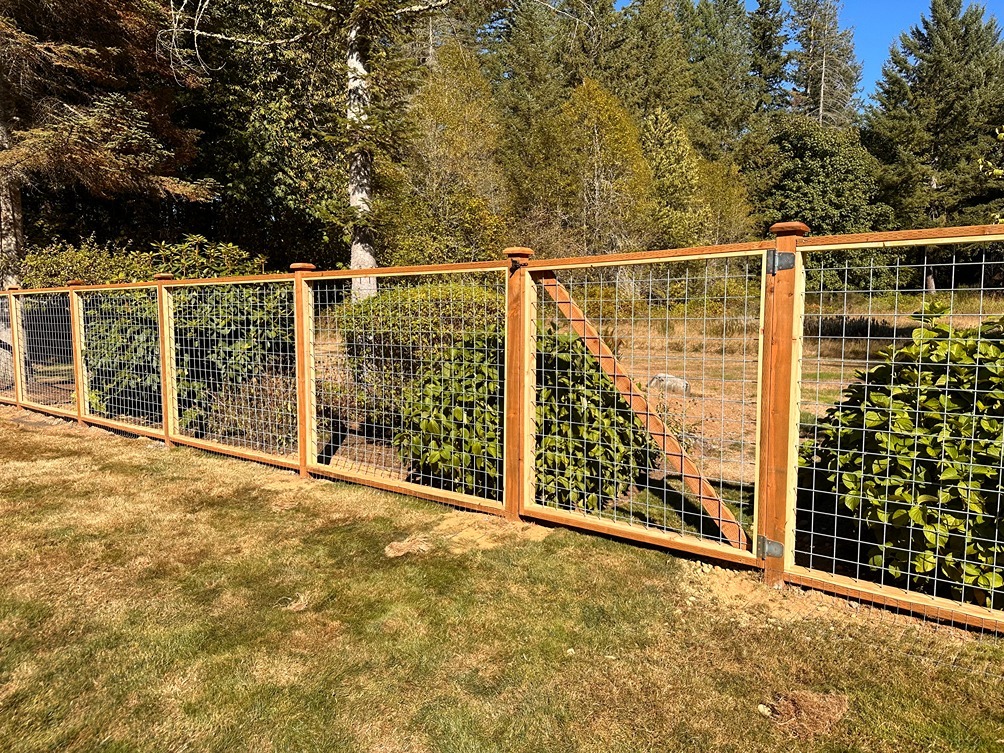
Picture a cedar frame with a sheet of welded steel mesh set inside it. That is a hog wire fence. The wood gives it warm, finished edges. The wire does the holding. Together they keep pets in and mark the line, without hiding your yard behind a wall.
This is the fence for people who want a line, not a curtain. At Rare Bears Fencing, most of the hog wire fencing we build for Seattle homes is the wood-frame version: pressure-treated posts and cedar rails wrapping heavy-gauge panels. It's one of several wood fence installation styles we build across the area. You get the structure of wood and the see-through strength of metal in one.
A standard build usually includes:
The mesh comes in a few opening sizes. Tighter squares near the ground stop small animals slipping through. Wider squares up top keep the airy look. We spec each panel around the job it has to do.
.webp)
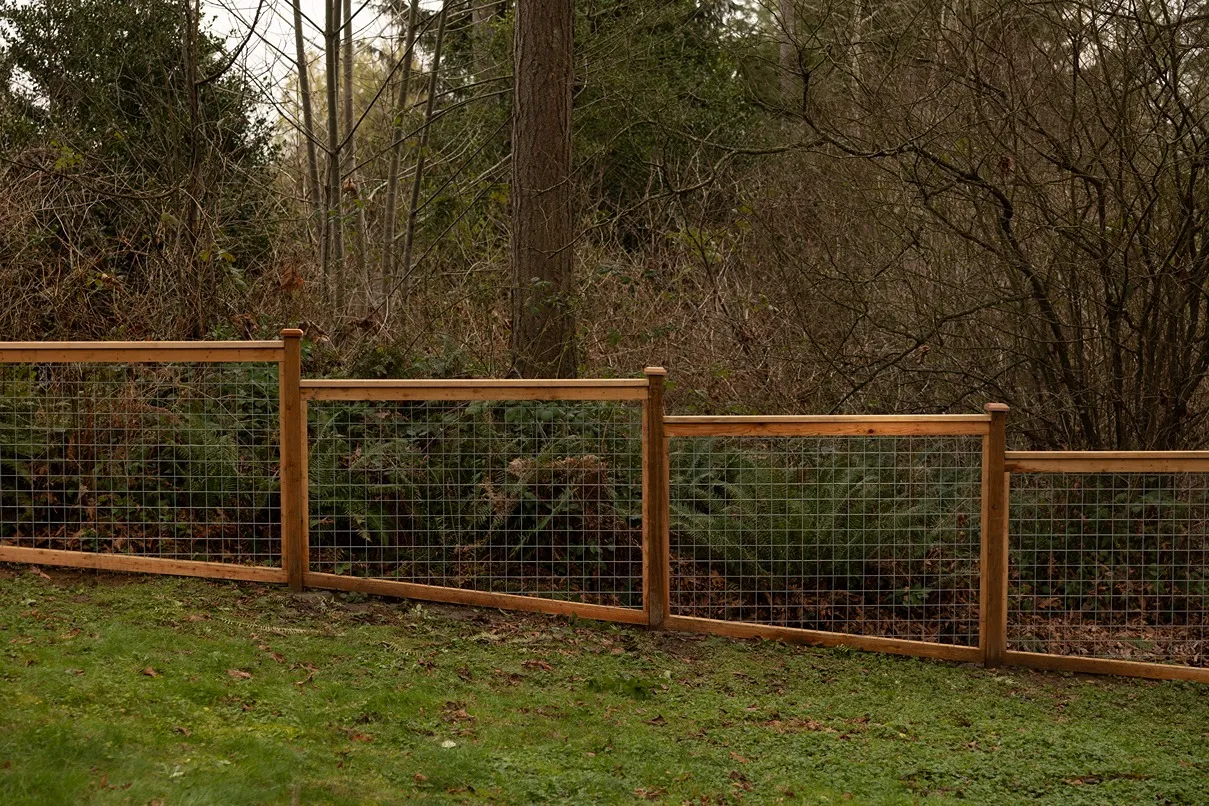
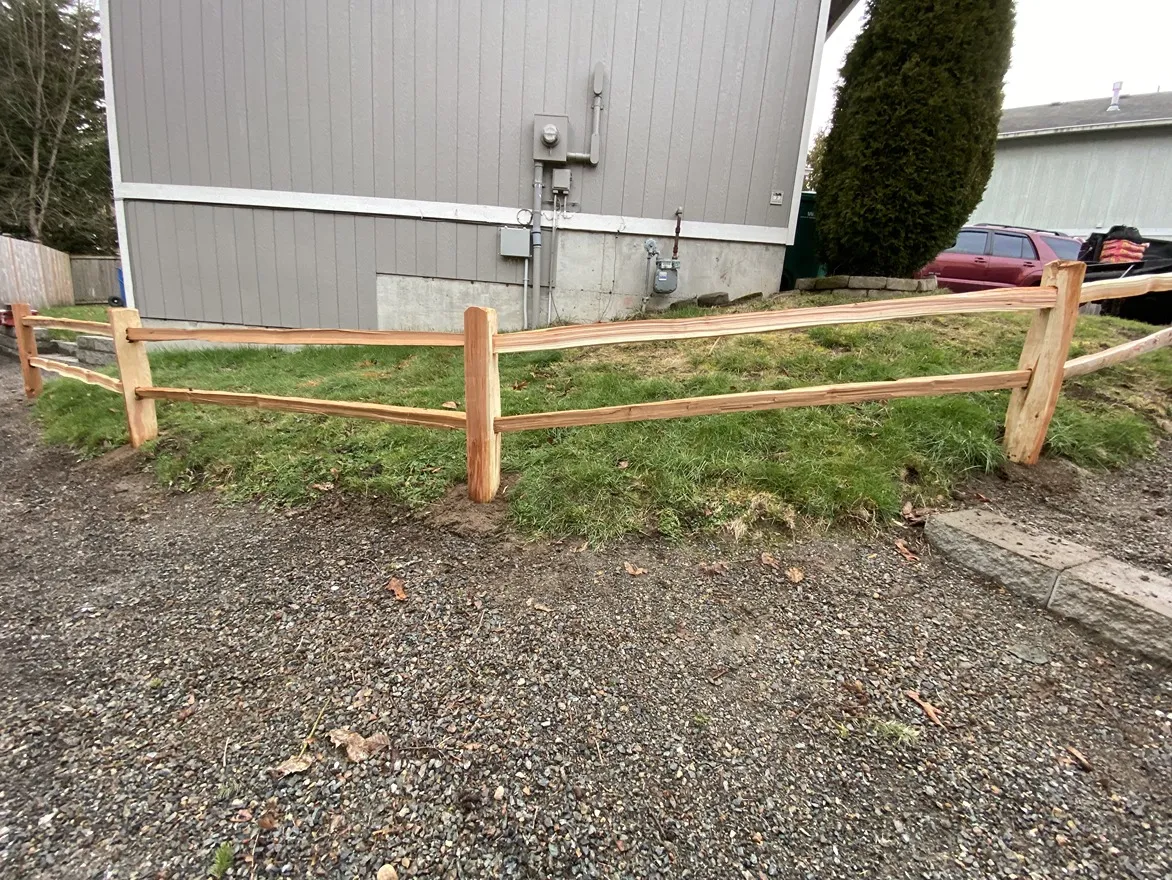
A hog wire fence has to survive Seattle weather on two fronts. The wood has to shrug off rain. The metal has to shrug off rust. Get one wrong and the whole fence ages badly, so we build with both in mind.
The cedar frame handles the wet.

Our winters are long and damp, and cheap lumber swells, twists, and rots where it meets the ground.
Cedar's oils keep the trim straight and square, while pressure-treated posts handle the wet ground where rot starts.
It takes stain well too, if you want a richer tone than the silver-gray cedar fades to on its own.
The cedar frame handles the wet.
Hog wire panels are welded at every joint, not woven, so they keep their grid shape under pressure instead of sagging like chain link.
Galvanized or coated wire resists rust through years of Pacific Northwest drizzle.
A black powder-coat finish is the popular upgrade, letting the mesh fade into the greenery for a more open view.
A taut, flat panel is what gives the fence its clean, modern look instead of a floppy farm-fence one.
Each material does a job the other cannot. That pairing is the whole point.
Hog wire sits in an interesting spot. It is stronger than it looks, more open than most wood fences, and better looking than the metal options people compare it to. Before you decide, it helps to see it beside the styles you are probably weighing. The table lays out the tradeoffs.
The short version: chain link fence is the value choice when open sightlines matter more than looks. Split rail fits big or rural lots where you're marking a line more than holding anything in. A full panel fence is the move when privacy comes first. Hog wire is for the yard that wants a solid barrier, an open view, and a sharp look all at once. Not sure which way to lean? Our team walks you through it during your free on-site estimate.
Seeing it beats reading about it. Below are hog wire fence projects from yards around the area, from backyard borders to garden surrounds to modern front-yard lines. Look at how the cedar frame changes the whole feel, and how the mesh keeps the view open behind it.
Want a closer look? See our black hog wire fence in Monroe, built for open views and pet safety, and a dog-friendly hog wire yard in Everett.
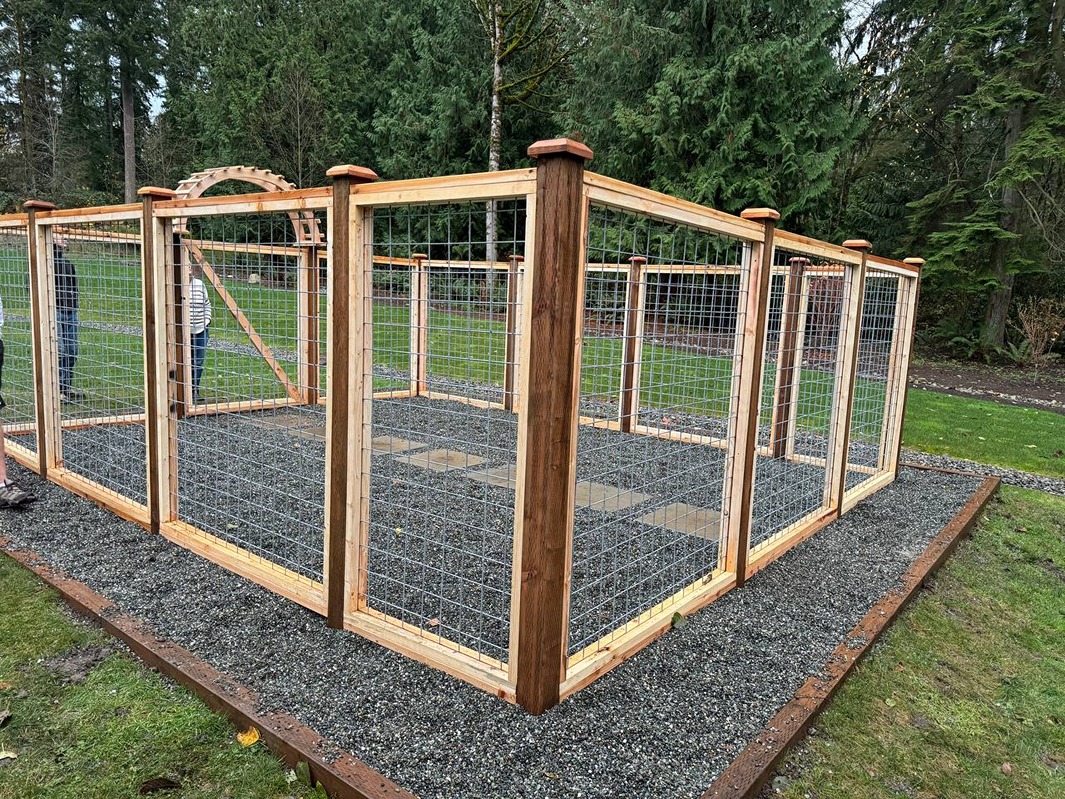
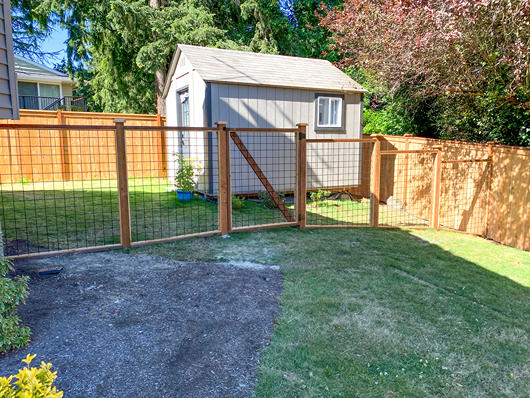
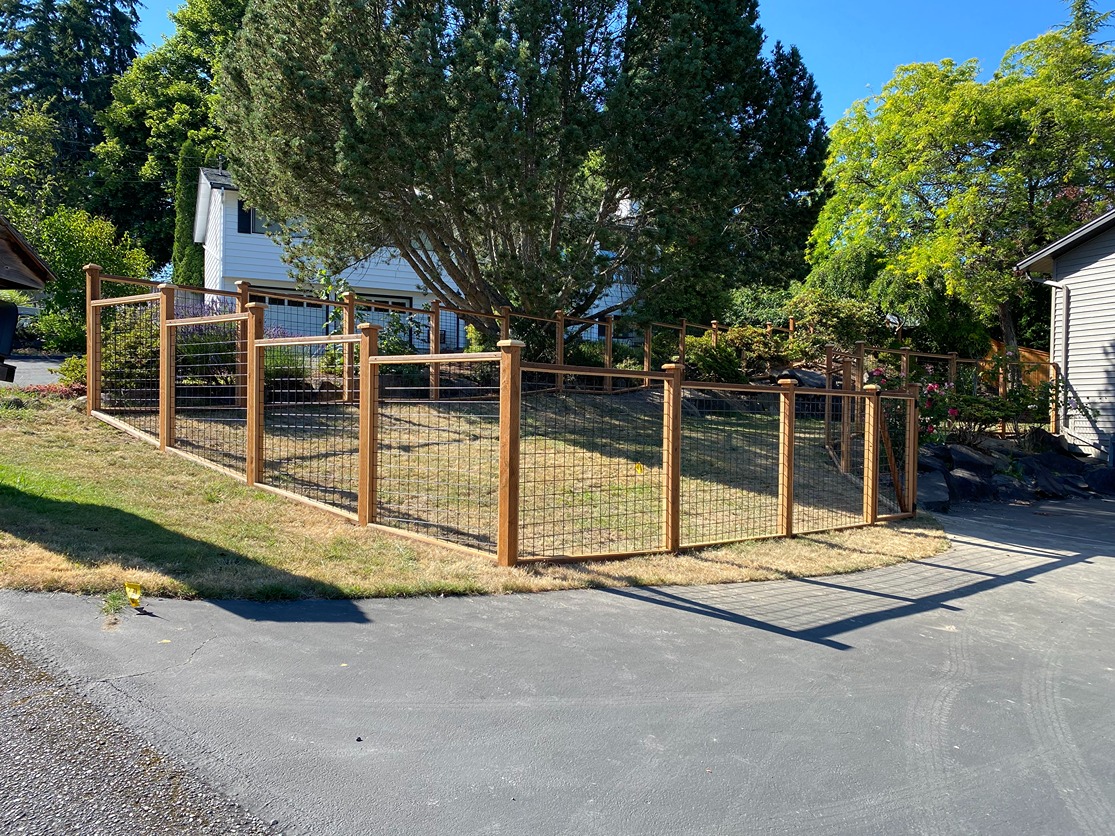
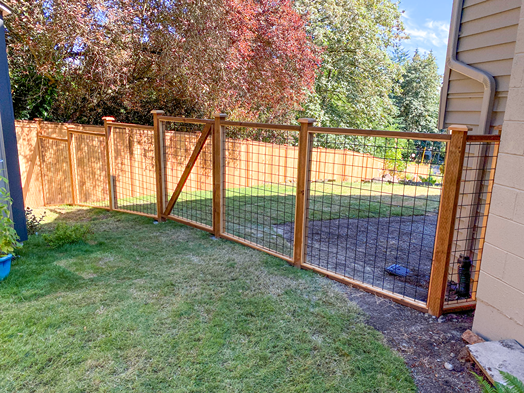
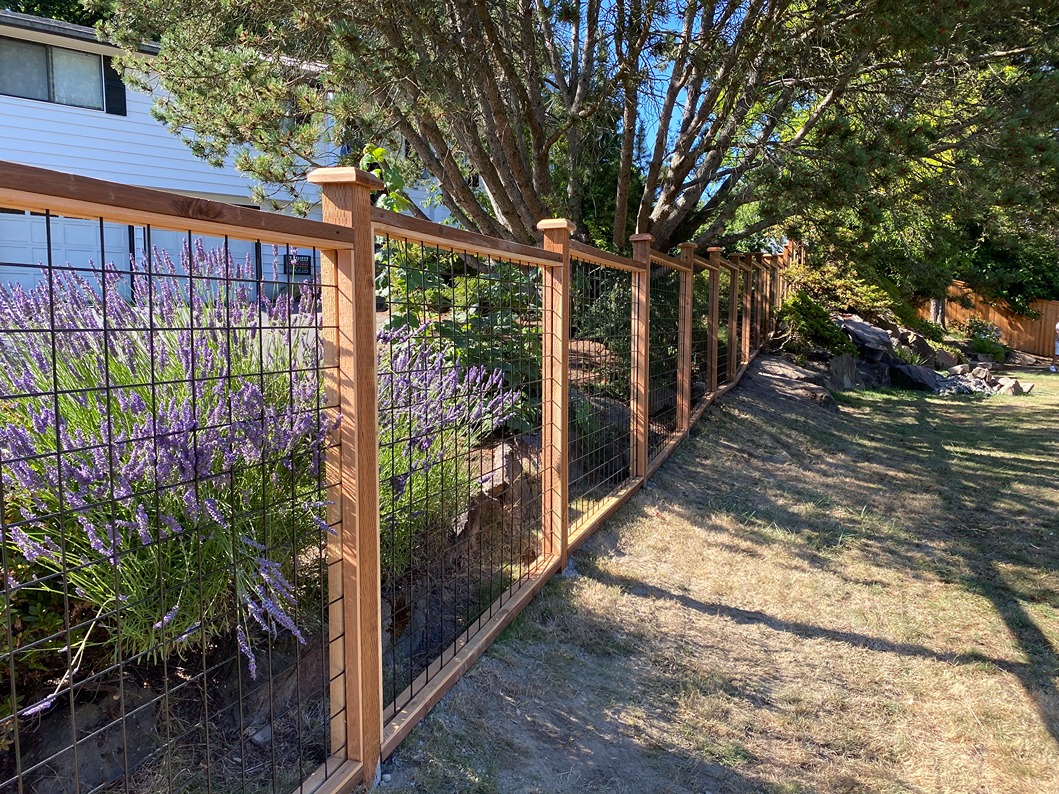
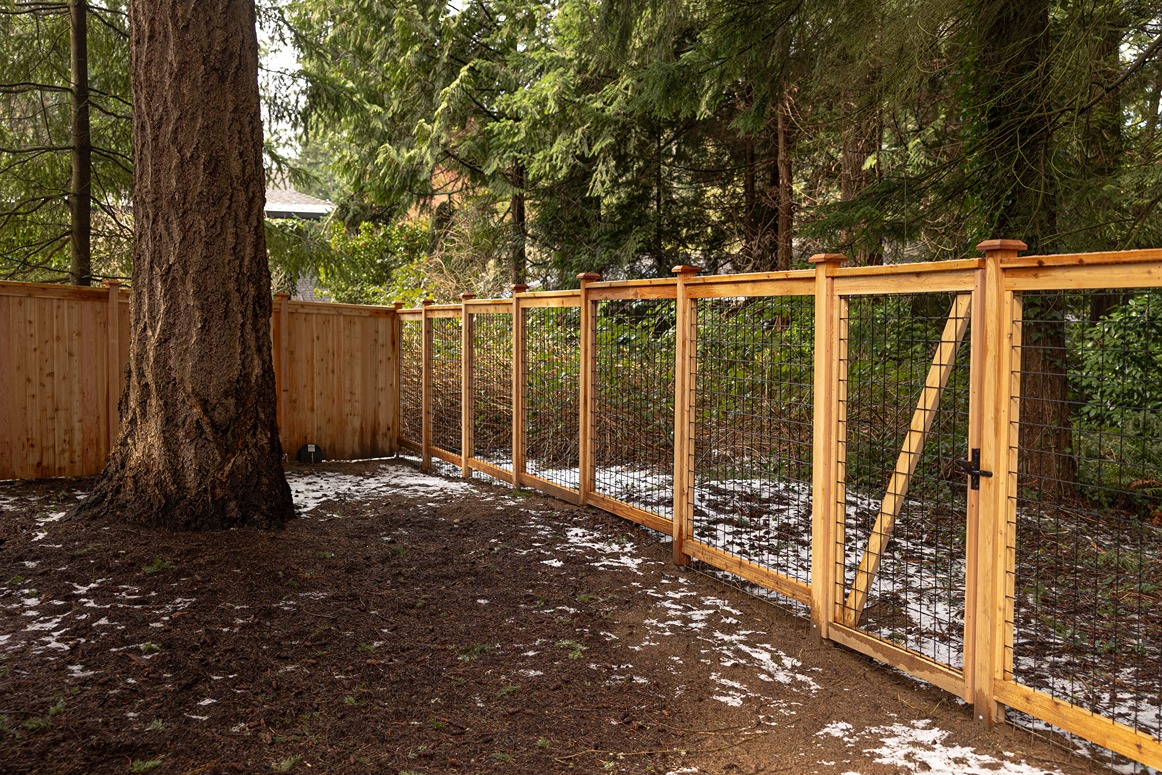
Let's be straight about the tradeoff up front, because it saves everyone time.
A hog wire fence will not give you privacy. You can see through the mesh, and so can anyone walking by. If your main goal is blocking the view from the street or the neighbors, this is not your fence, and a full panel cedar fence will serve you far better.
Now the flip side. What hog wire does better than almost any other style:
If those wins matter more to you than privacy, hog wire is hard to beat.
Two decisions do most of the work in setting how your hog wire fence looks and performs. Get these right and the rest falls into place.
Three things set the panel: gauge, opening size, and finish.
We help you match all three to what you're fencing for.
This sets the personality. A chunky frame with square posts reads bold and modern. A slimmer profile feels lighter and more traditional. Post caps, corner detailing, and whether you go natural cedar or a stain all live in this choice too. The frame is the part your eye lands on first, so it is worth thinking through.
Panel height is the other lever. We build hog wire from 3 to 6 feet. The 3-foot runs suit front yards and garden borders. 6-foot builds handle backyards and pet containment. We'll walk the options on-site once we see the space.
A hog wire fence is two materials working together, so the price tracks both the panel and the frame. Here is what actually moves it.
The panel side comes down to the gauge and opening size you pick, and the cedar side depends on the grade and how much framing the design calls for. We'll price both with you when we measure the yard. If you want ballpark per-foot ranges and a full spec breakdown before we talk, our hog wire fence guide for Seattle homeowners walks through the numbers.
Hog wire can go almost anywhere, but a handful of spots are where it really earns its keep. Rare Bears Fencing builds it across Seattle in all of them.
If your yard looks out on trees, water, or a green belt, a solid fence throws that away. Hog wire marks the line and leaves the view intact.
The mesh lets sun and air reach your plants while keeping rabbits, dogs, and stray feet out of the beds. Tighter openings near the ground do the real work here.
For a yard where you want the dog contained but the space to still feel big, hog wire is a strong pick. Match the opening size and height to your dog and it holds without boxing the yard in.
The cedar-and-metal combination fits both the clean-lined contemporary builds and the rustic farmhouse look popular around Seattle and Snohomish. It reads intentional, not utilitarian.
Most fences forgive a little sloppiness. A solid wood wall hides a post that sits slightly off. Hog wire hides nothing. Every weld, every bit of panel tension, every frame joint is out in the open. The only way to build one well is to get it right the first time, and that is the part we care about most.
Here is what that looks like in practice:
That standard has earned Rare Bears Fencing a 4.9 out of 5 across 631 reviews, one straight, tight, honest fence at a time, all across King and Snohomish Counties.

.svg)
Most residential hog wire fences are a cedar frame filled with welded steel mesh panels. The wood handles the structure and the finished look, while the galvanized or coated wire handles the strength and stands up to rust. At Rare Bears Fencing, the cedar-framed version is what we build most.
No, and that is by design. You can see straight through the mesh. If privacy is your goal, a full panel cedar fence is the better call. Hog wire is for marking a boundary while keeping the view open.
Good panels resist it. We use galvanized or coated wire made to hold up through years of Seattle rain. Rust becomes a problem mostly with cheap, uncoated panels, which is why the material choice matters.
For most dogs, yes. Welded mesh holds firm where woven wire would give, so it takes real force to breach. We match the opening size and the height to your dog, so a digger or a climber gets a build planned around them.
Cedar trim frames each panel, and it resists rot and insects and takes stain cleanly. The posts are pressure-treated for ground contact, with pipe-mounted cedar upgrades available in the higher packages.
It ranges. Low borders run around three feet for front yards and gardens. Backyard and pet-containment builds go taller. Seattle has height rules for front-yard fences, so we confirm the local limit for your property during the estimate.
It lands in a similar mid-range, and the final number depends on your wire gauge and cedar grade. It often costs less than a premium full-panel build while giving you a look that reads as more custom than chain link.
Yes. Our crew handles Seattle's slopes and rocky soil regularly, stepping the panels or racking the frame to follow the grade so the fence stays level and looks intentional.
Sometimes. Seattle sets rules on fence height, especially in front yards, and HOAs often have their own look requirements. It is worth checking first, and our team knows the local limits and can steer you right during the estimate.
Call (206) 202-9157 or fill out our online form. We come to your property, measure, talk through panel and frame options, and hand you a written quote. We build across King and Snohomish Counties, so most nearby towns are covered.
.png)


.png)